
Twenty-Five Years on the Siang
From my first descent in 1994 to twenty-five seasons of expeditions with Aquaterra, the Siang has been a journey through extraordinary whitewater, remote Himalayan landscapes and a world that continues to change.
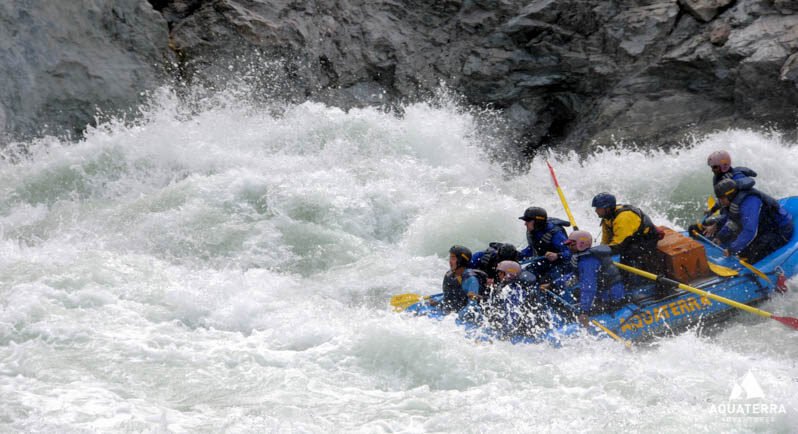
One of my most memorable moments on the Siang came during our 2002 expedition. The then Chief Minister of Arunachal Pradesh had arrived by helicopter to inaugurate the expedition at Tuting, and the NatGeo film crew had secured a ride to film us running Ningguing, a massive Class V rapid. We had scouted the rapid and were lining up for the descent when the helicopter’s rotors began blowing sand straight into our eyes. There we were, about to tackle one of the biggest rapids on the river, waving for the helicopter to move away. We eventually washed the sand from our eyes and ran the rapid, but the incident gave Ningguing a nickname we’ve remembered ever since — “Frigging Ningguing.”
The beginning of a long relationship
The Siang is the Yarlung Tsangpo after it crosses Tibet and breaks through the Himalaya into Arunachal Pradesh. By the time it reaches India, it is one of the biggest-volume rivers that can be rafted.
I first ran the Siang in 1994 with the Indian Army. Eight years later, in 2002, we returned to the Upper Siang for Aquaterra’s first expedition on the river.
It was a significant undertaking. We were opening one of the largest commercially run river expeditions in a remote part of Arunachal Pradesh, where the logistical challenges were almost as formidable as the river itself.
The expedition attracted considerable attention. Outside Magazine, Paddler Magazine and several major newspapers covered our journeys, and a National Geographic film was produced. It marked a new chapter in a relationship with the river that would continue for decades.
This season marks our 25th year on the Siang. And despite all the time I’ve spent here, its scale and power remain extraordinary.
A thousand shades of green
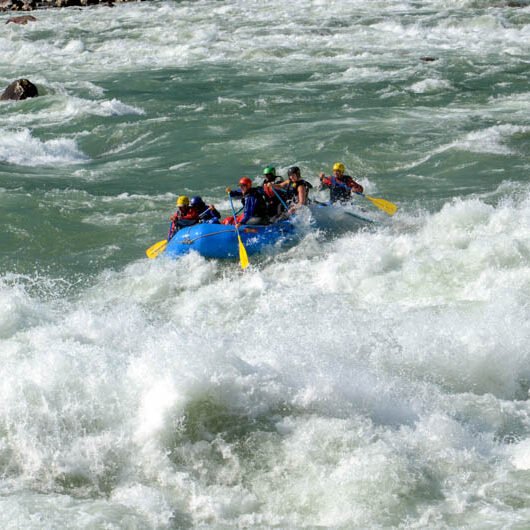
The Siang is a river of striking contrasts. Enormous wave trains, powerful boils and eddies, and long pool-drop rapids dominate its remote gorges. Everything about this river feels immense.
But what makes the Siang special is not simply the whitewater. It is the landscape through which it flows.
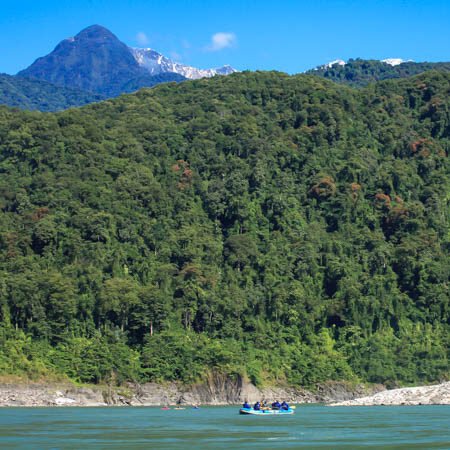
We begin near Tuting, close to where the river enters India. This is mountainous Memba country, where Buddhist communities have lived for generations. As we travel downstream, the valley gradually transforms. The air becomes warmer, the forests grow thicker, and Adi villages begin appearing along the banks.
The middle stretches hold some of the most powerful rapids. Farther downstream, towards Pasighat, the hills begin to recede and the river widens as it approaches the plains. You can almost feel it becoming the Brahmaputra.
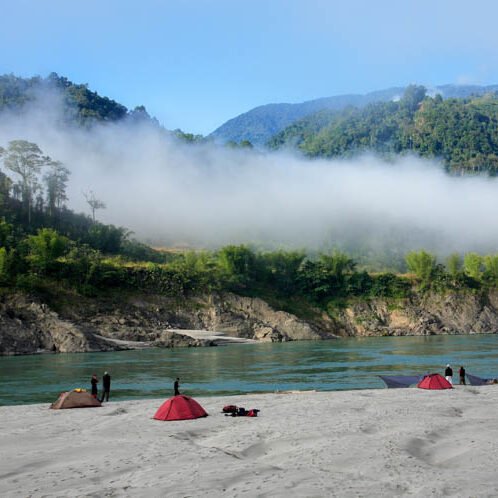
In the space of about ten days, we travel from the Himalaya towards Assam, passing through a thousand shades of green, camping on enormous white-sand beaches and navigating some of the finest whitewater anywhere.
Three days in the gorges
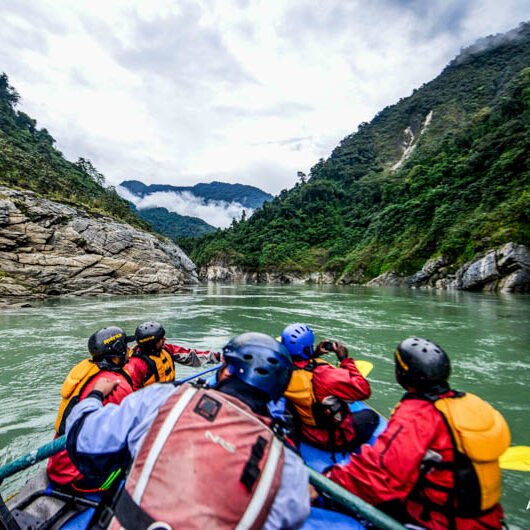
The Ningguing and Marmong gorges are among my favourite sections of the expedition.
For three days, we are completely self-contained. There are no convenient roads or easy ways out. It is just our group, the rafts, the equipment we carry and the river ahead.
These stretches offer everything that makes a true whitewater expedition special. Powerful rapids, enormous waves and challenges that demand preparation, experience and teamwork.
On a river of this scale, there is no room for complacency. Every expedition requires careful planning, sound decisions and an understanding of how remote the valley really is.
Yet what stays with me is not only the adrenaline. Between the rapids, there are birds calling from the forests, fishermen along the banks and glimpses of village life. The forest often comes right down to the water. The whole valley feels lush and alive.
Life at camp
One of my favourite things about expedition life is how quickly everything becomes simple. We follow a routine that I like to describe as 6–7–8: tea at six, breakfast at seven, departure at eight.
We run the river until lunch, then continue downstream until we find our campsite. Tents go up, equipment is organised, and the rest of the day is ours.
Some people take a walk. Others read, listen to music or sit around chatting with fellow travellers. There is no complicated schedule, and very little of the constant distraction that fills everyday life.
People usually arrive expecting the rapids to be the highlight of the expedition. And, of course, the whitewater is spectacular. But what often surprises them most is the remoteness.
Days without phone signals, roads or the usual conveniences. Time spent with people who were strangers when the expedition began. The simple satisfaction of arriving at camp after a demanding day on the river. These are the things that often stay with travellers long after the journey is over.
A river worth protecting
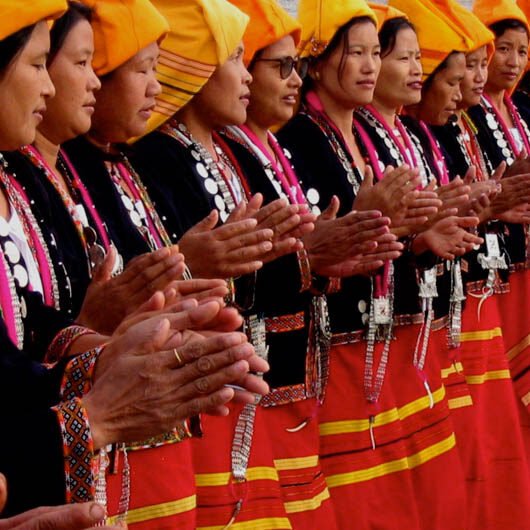
Over the past twenty-five years, we’ve returned to villages like Tuting, Pango, Rikor, Ramsing and Yingkiong. The warmth and generosity of the Adi, Galo and Memba communities have always been an important part of the journey.
I’ve watched roads and connectivity transform the Siang Valley, bringing remote villages closer to the outside world and making expeditions easier to organise. But these changes also make preserving the river and its surroundings increasingly important.
For us, that means travelling responsibly, respecting local communities, leaving the riverbanks as we found them and prioritising safety in these remote landscapes. Looking ahead, the proposed Siang Upper Multipurpose Project raises even bigger questions about the river’s future.
After decades on the Siang, what stays with me is not just its power and beauty, but the people, the simplicity of expedition life and watching travellers leave with a different perspective. I hope this remarkable river continues to flow freely, giving future generations the opportunity to experience what has kept bringing me back all these years.
Meet the Contributor
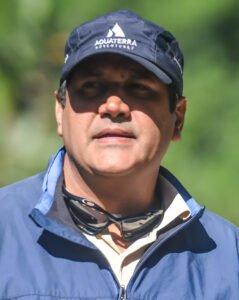
Vaibhav Kala
Founder & Director, AquaTerra Adventures
Vaibhav Kala has guided expeditions across the world, from Morocco to the Inca Trail, from the Colorado to the Yangtze, from the Futaleufú to Aconcagua, from Ahansel to the Zambezi, and from Kilimanjaro to the Everest Trail.
Vaibhav has pioneered numerous Himalayan expeditions, opening remote regions to adventure tourism. Aquaterra Adventures was the only Indian adventure company featured in the National Geographic Society’s 2008 and 2009 lists of the Best Adventure Travel Companies on Earth.
Read MoreRead Less
His leadership, expertise in mountain and river environments, commitment to safety and risk management, and meticulous planning have been central to the success of the internationally recognised Aquaterra Adventures.
With 33 years of experience in adventure tourism and numerous pioneering expeditions to his credit, Vaibhav has helped introduce international travellers to rural regions while creating opportunities for local youth through employment, training and a sense of pride in their heritage.
His work with governments involves developing policies and frameworks to make adventure tourism safer, more responsible and sustainable.
Today, Vaibhav champions a sustainable adventure tourism model that brings together culture, community, the environment, health and wellness with adventure and excitement. His approach seeks to improve lives and livelihoods through meaningful experiences built on resilience, pride and purpose.
This first-person account was developed from his responses to The Earth Farer and edited for narrative flow.
Explore the Adventure
Brahmaputra (Siang) River Rafting Expedition