Spring
Mar-MayValley remains snowbound and closed; snowmelt begins before the June opening.
The Valley of Flowers Trek combines an accessible Himalayan trail with one of India’s most remarkable alpine ecosystems.
The Valley of Flowers Trek is one of Uttarakhand’s most scenic Himalayan journeys, leading into a high-altitude valley famous for its summer bloom of alpine wildflowers. The trail begins from Govindghat and climbs through forested slopes, waterfalls and mountain streams before reaching the village of Ghangaria.
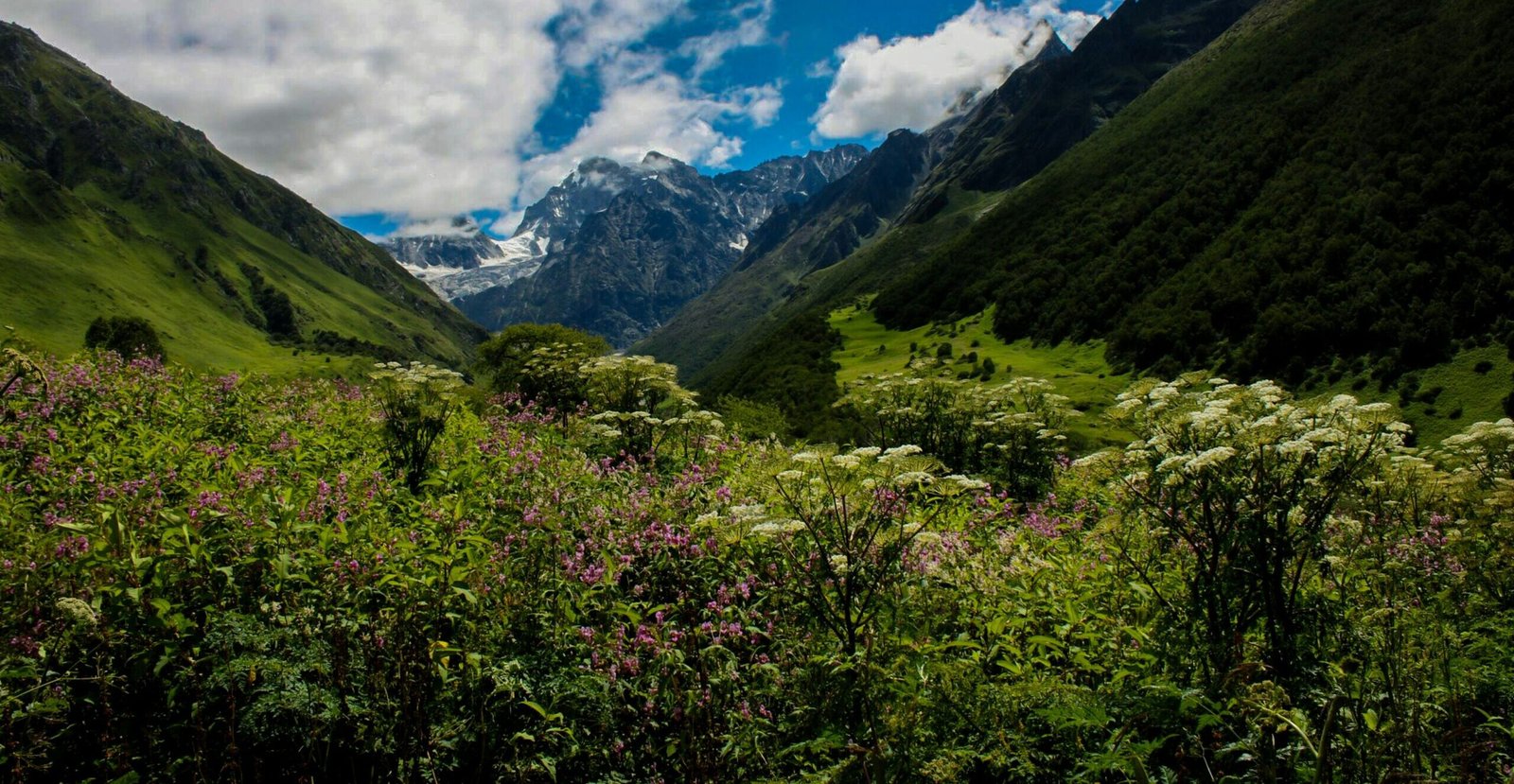
From Ghangaria, the route enters the Valley of Flowers National Park, where meadows spread beneath steep Himalayan peaks and fill with colourful flowers during the monsoon months. The landscape is constantly changing, with mist, streams and dense vegetation giving the valley a distinctly lush character.
Many itineraries also include a climb to Hemkund Sahib, a high-altitude lake and pilgrimage site at around 4,300 metres. With its combination of wildflower meadows, dramatic mountain scenery and relatively short trekking days, the Valley of Flowers offers a very different Himalayan experience from the drier, higher-altitude routes farther north.
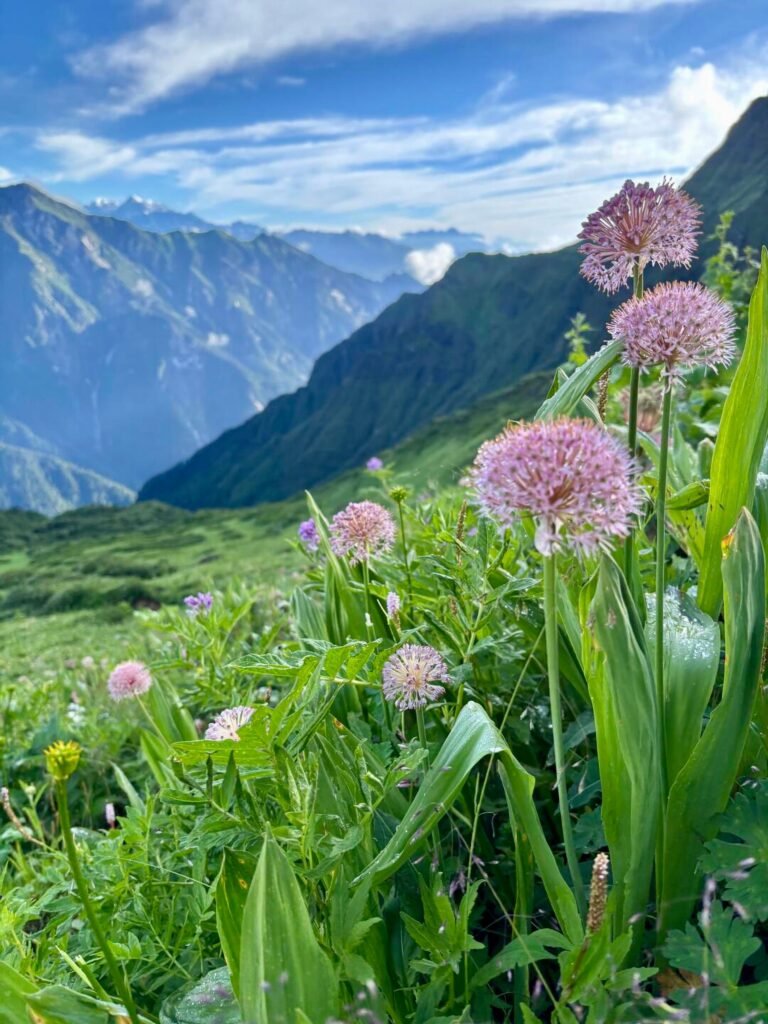
Spectacular alpine wildflowers.
Monsoon rain, slippery trails and peak-bloom crowds.
Travel through the Alaknanda Valley toward Govindghat, the traditional starting point for both the Valley of Flowers and Hemkund Sahib trails. Stay overnight near Govindghat.
Begin the trek through the Bhyundar Valley. The trail steadily gains altitude alongside rivers, waterfalls and forest before reaching Ghangaria at around 3,050 m. Stay overnight in Ghangaria.
Start early and walk roughly 4 km from Ghangaria to the Valley of Flowers. Once inside the national park, continue farther into the valley through alpine meadows, streams and flower-covered slopes before returning to Ghangaria in the afternoon. Camping and overnight stays are not permitted inside the national park, so visitors must return to Ghangaria the same day.
You have two options. Explore around Ghangaria or trek to Hemkund Sahib. Hemkund is considerably higher and harder than the Valley of Flowers trek, it is an optional extension, not part of the basic Valley of Flowers trek.
Descend the same valley back toward Pulna and Govindghat.
Drive toward Rishikesh, Haridwar or Dehradun.
Valley remains snowbound and closed; snowmelt begins before the June opening.
Park opens; July–August bring peak blooms, rain and slippery trails.
September has clearer views and late flowers; October is colder with fading blooms.
National park closed and the valley is buried under snow.
Check current park opening and road conditions before travelling to Govindghat.
Expect wet and slippery trails because the best flowering period overlaps with the monsoon. Carry proper rain protection and footwear with good grip, and start the Valley of Flowers day early because overnight stays inside the national park are not allowed. Keep sufficient cash and basic supplies with you once you move beyond the larger towns.
Current permits and trekking regulations may change. Always verify before booking.